Stomach Drama Quote: A Real-World Embroidery Review
As someone who’s stitched hundreds of designs across apparel, home goods, and boutique merchandise—and reviewed dozens of digital embroidery files for craft businesses—I opened Stomach Drama Quote with a mix of curiosity and caution. It’s not just another “funny quote” graphic. It’s got heart—literally—and a tone that lands somewhere between empathetic and cheeky. I tested it on a custom unisex sweatshirt for a local wellness boutique, then again on a linen tea towel for a holiday pop-up. Here’s what held up—and what needs your attention before you commit.
First Impressions: Charm with Clear Intent
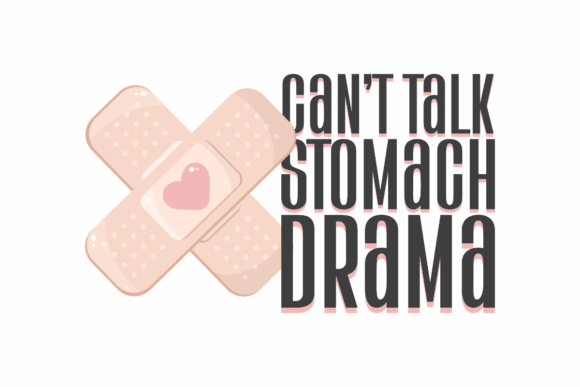
The design hits right away: a centered bandage motif with a tiny heart at its core, wrapped around bold, slightly rounded sans-serif lettering (“When your gut is doing backflips…”). It’s not minimalist—but it’s not cluttered either. The bandage acts as both visual anchor and thematic frame, giving the typography room to breathe while reinforcing the message. As a machine embroidery design, it reads well at 3.5"–4.5" wide—the sweet spot for sweatshirt chest placement or tote bag centering. Its personality leans warm, relatable, and quietly confident—not snarky, not clinical, just human. That matters when you’re stitching for real people who’ll wear or gift this.
Where It Shines (and Why Your Customers Will Notice)
I used Stomach Drama Quote on a heavyweight cotton blend sweatshirt for a small shop launch. Stitched in soft heather grey thread on charcoal fabric, it looked polished but approachable—exactly what their audience wanted: wellness-adjacent, not medical; lighthearted, not flippant. The bandage’s satin stitch edge held crispness, and the letterforms stayed legible without oversimplifying. That clarity translates directly to perceived value: customers don’t see “just text”—they see intention, care, and brand voice made tactile.
It also worked beautifully as an embroidered patch on organic cotton baby onesies (yes, really—this resonated with new parents navigating postpartum digestive chaos *and* social exhaustion). On lightweight fabric, I added tear-away stabilizer and reduced top tension slightly—no puckering, no distortion. As a personalized gift or holiday embroidery piece, it adds warmth without cliché. For Etsy sellers, it’s a standout in the “relatable wellness” niche—more distinctive than generic affirmations, more grounded than inside-joke graphics.
Real-Life Fit Across Common Projects
- Tote bags & aprons: Holds up well on medium-weave canvas—bandage shape prevents visual sinking into texture.
- Pillow covers & tea towels: Works best when centered or placed mid-panel; avoids corners where stitch density can cause distortion.
- Caps & curved surfaces: Use only if your hoop size allows full-bandage clearance—tight curves risk stretching the heart detail.
- Baby embroidery & nursery decor: Softens nicely in pastel thread; avoid ultra-thin fabrics unless stabilized properly.
- Digital product previews: Renders cleanly in printable mockups—ideal for Etsy listings where buyers scan quickly.
Where to Pause (Before You Stitch)
This isn’t a one-size-fits-all embroidery file. Its charm depends on thoughtful execution—not just placement, but preparation.
The bandage’s inner heart is small but essential. On stretchy knits (like some t-shirt blanks), even light pull can blur that detail. I recommend testing on scrap first—and checking how the fill stitch behaves under gentle stretch. Likewise, on dark fabric, confirm your thread color contrast holds up after washing: low-contrast greys or creams may fade visually over time, dulling the message.
Don’t assume it’s optimized for tiny hoops. If you’re planning cap embroidery or pocket-sized patches, verify whether the original digital embroidery file includes a scaled-down version—or be ready to simplify manually (e.g., reducing bandage width, tightening kerning). And while the design feels friendly, its theme means context matters: it’s less ideal for corporate swag or formal baby gifts unless paired intentionally (e.g., a matching “Mom Survival Kit” towel set).
Design Notes You’ll Actually Use
Here’s what I did—and what I’d tell any fellow designer, Etsy seller, or craft business owner before using Stomach Drama Quote:
- Test on scrap fabric first—especially if stitching on textured weaves, fleece, or blends.
- Check thread color contrast in natural light *and* under store lighting—some heathers shift unexpectedly.
- Review stitch density: dense fill areas (like the bandage body) need appropriate stabilizer—cutaway works best for heavy wear items like sweatshirts.
- Confirm hoop size compatibility before digitizing or resizing—don’t force it into a 3" hoop if the bandage spans 3.7".
- Inspect small details in your embroidery software: is the heart fully digitized? Are letter terminals clean at 3x zoom?
- Test black-and-white mockups—this design relies on shape + type, so grayscale readability is non-negotiable.
- Compare light/dark backgrounds in your design workflow—not just final output.
- Use proper stabilizer for your fabric type; skip it on thin cotton, and you’ll regret it.
- Verify licensing before selling finished products or bundling the digital embroidery file—especially for commercial embroidery or craft fair use.
Final Thought: It’s More Than a Graphic—It’s a Conversation Starter
Stomach Drama Quote isn’t just a Graphics category download. It’s a small piece of emotional resonance, translated into thread. When stitched well, it elevates a plain sweatshirt into something people pause to read—and smile at. That kind of quiet connection builds trust, encourages shares, and turns casual browsers into repeat buyers. But it only delivers that impact if treated like the considered embroidery project it is—not rushed, not assumed, not applied without testing.
If you sell handmade products or manage a craft business, this design fits right into your “thoughtful-but-fun” lineup—alongside self-care kits, cozy loungewear, and wellness-themed home goods. Just remember: its strength lies in authenticity, not automation. Stitch it with care, and it’ll do the talking—clearly, kindly, and memorably.